FOCUS TRIBUTE HOMEPAGE – 30 YEARS
FOCUS TRIBUTE HOMEPAGE – 30 YEARS
(To the original portuguese version)
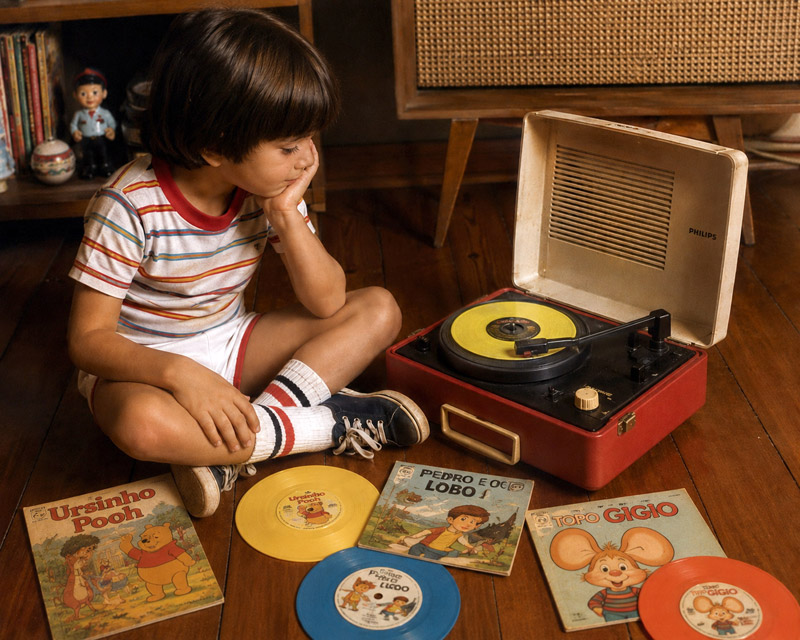
Elvis Never Entered Our House - My
father had what he called "grown-up records." His collection consisted mainly of
Brazilian popular music, followed by a great deal of classical music and some
jazz. Rock music, however, was simply not welcome. He wasn't a fan of the genre,
and I clearly remember hearing him make less-than-flattering comments about
Elvis Presley on more than one occasion.
When I finally began choosing my own music, I was
drawn to disco, which had become a huge craze during the second half of the
1970s. My taste was heavily influenced by television and by my friends. At that
point, I was still a long way from discovering real rock music.
My Father Became a Rocker? - One
afternoon my father came home carrying... a rock compilation album! I couldn't
believe my eyes. What had happened? Actually, nothing unusual. The album was a
gift for one of his co-workers—probably another fan of Brazilian or classical
music—and it was most likely part of some office joke. I put the LP on the
turntable anyway and ended up recording two songs onto a cassette tape. I still
remember them: "Roll Back the Water" by Bachman-Turner Overdrive and "Mamma Mia"
by Left Side—coincidentally, a Dutch band. That was my very first encounter with
real rock music.
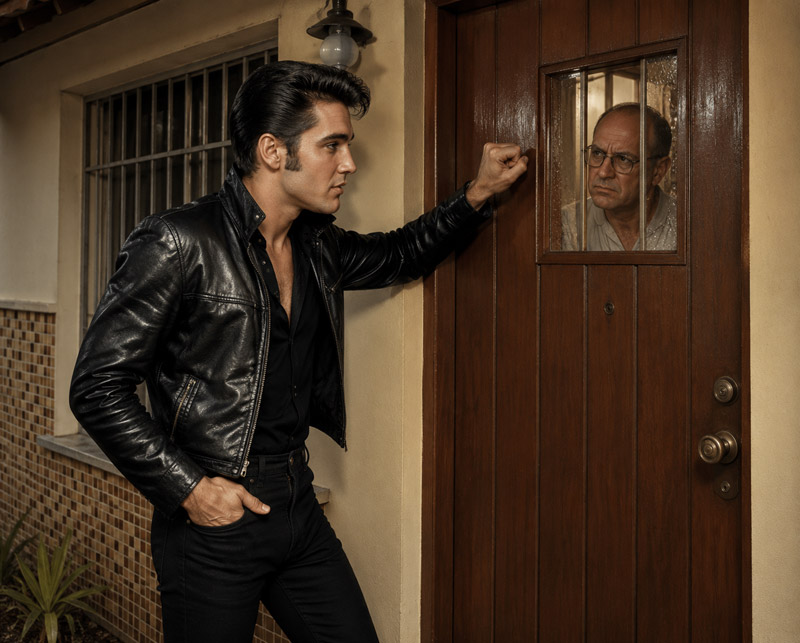
In 1980 we moved to a new house. After years of renting, my father finally
fulfilled his dream of owning the home he had worked so hard to build. One
afternoon he arrived with a brand-new stereo system, perhaps to celebrate this
achievement. Ironically, I was the one who used it the most—and, in fact, I
still do to this day.
I spent countless hours listening to the radio—the Internet of its
time—especially alternative music programs. Since I couldn't yet afford to buy
my own records, I recorded countless songs onto cassette tapes.
I don't want to make this section too long because I intend to write another
text dedicated entirely to that period and to everything I discovered through
those remarkable radio programs.
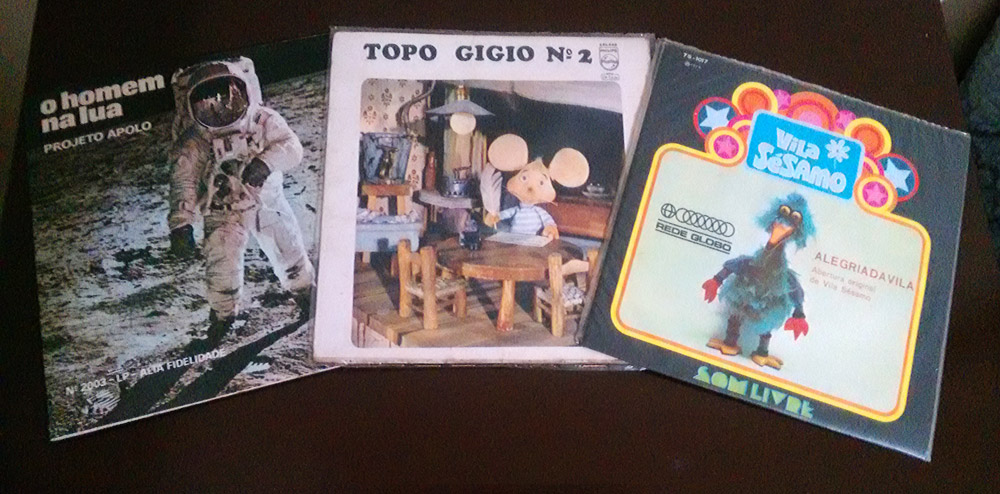
Some of that singles from my childhood
Stumbling Along the Cornerstone Hocus Pocus -
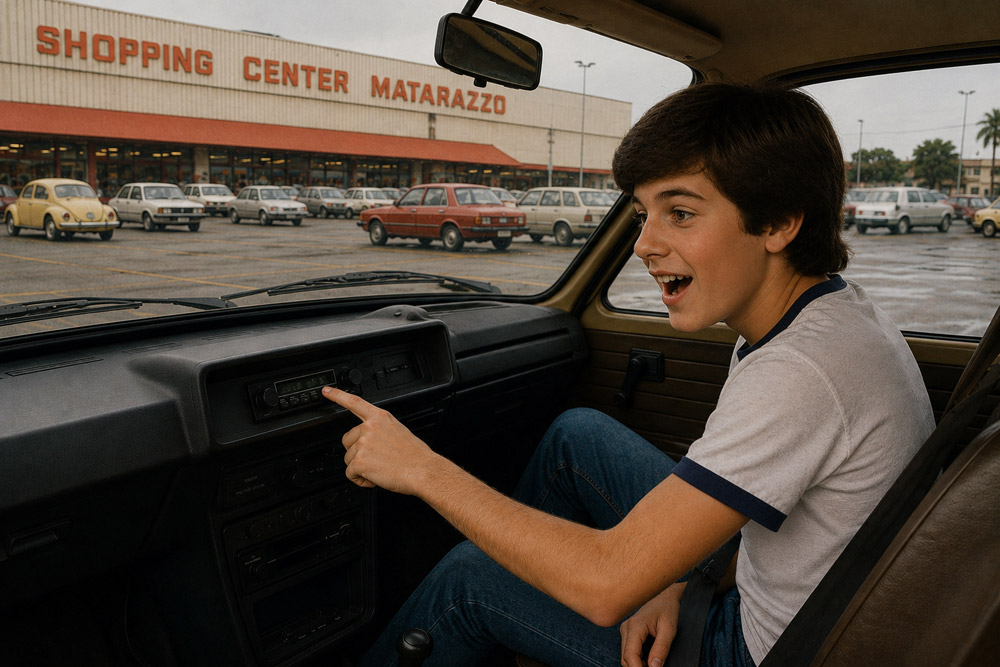
One Saturday morning in 1980, as we often did, we drove from our new
neighborhood back to the supermarket where we used to shop before moving. While
my parents went inside to buy groceries, I decided to stay in the car, sitting
in the parking lot listening to the radio.That was the day I heard Focus for the
very first time. The song was "Hocus Pocus." I don't even need to say how amazed
I was. Because I still knew so little about music, I immediately thought to
myself: "This band is going to be huge!" Little did I know that the band had
already broken up.
Looking back, it's easy to imagine how much wonderful
music I missed throughout the 1970s—partly because I was too young, and partly
because of the musical 'apartheid' that existed in our home. Fortunately, I made
up for lost time during the following years. I spent most of the 1980s digging
through used record stores, collecting everything I could find by Focus, as well
as progressive rock in general.
IN THE BEGINNING, THERE WAS DARKNESS
It was 1995. There were no smartphones, no Android, no
Google, no Facebook, no Instagram, no eBay, and no Amazon. DVDs didn't exist
yet. Nobody had ever heard of MP3 files. People were still fascinated by the
relatively new compact disc, eagerly replacing their beloved vinyl albums from
the 1960s, 1970s, and 1980s with digital editions. If you wanted to watch a
movie or a cartoon, you rented a VHS tape from Blockbuster or your neighborhood
video store. Demand for CDs and videotapes was booming, and thousands of
specialty stores sprang up across the country, competing with the large
supermarket chains.
The first PC we'll never forget - It
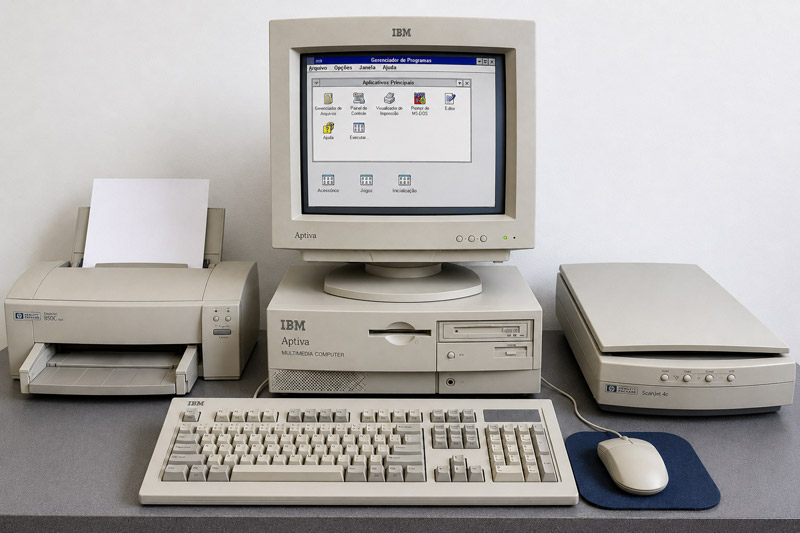
was in this environment that we bought our very first computer: an IBM Aptiva
Multimedia PC with a 14-inch monitor, a 14.4 kbps fax modem, a CD-ROM drive, and
stereo speakers. Apple computers were prohibitively expensive in Brazil, and
were found almost exclusively in large companies.
The package also included an HP DeskJet 850C printer and an enormous HP ScanJet
4C flatbed scanner. Both had just been introduced to the market, making the
purchase a major financial investment. To make it happen, my father spent months
researching computers, carefully clipping newspaper articles and advertisements
and filing them away in a small folder with elastic bands. Every clipping came
from the newspaper classifieds.
Time in front of the computer quickly became a fiercely contested privilege
between my brother, my mother, and me. Ironically, my father—the person who had
bought the computer—used it the least. He struggled with the mouse and, I
suspect, found it discouraging.
Before then, I had never been particularly interested in computers or their
seemingly complicated operating systems. But Windows 3.1 completely changed my
perspective. I fell in love with its graphical interface. Being able to organize
files into folders, edit documents without worrying about making irreversible
mistakes, and simply explore this new digital world felt nothing short of
revolutionary.
Thou Shalt Not Type in Vain - I
picked up the Windows 3.1 manual that came with the computer, and it became my
Bible. I went to bed reading it and woke up reading it. I memorized every detail
of the operating system and its built-in programs. From there, learning about
computer hardware was only a small step. Before long, I was upgrading the
machine myself, replacing the hard drive—still commonly called a "Winchester"
back then—and installing additional RAM.
At the magazine publishing company where I worked, QD
Editora, our department already had a computer, but I wasn't the one who
operated it. Having my own PC at home meant I could now enjoy the same
technological resources I had at work—only from the comfort of my own house. In
many ways, that's still true today.
Now You're Going to Have the Internet! -
The weeks surrounding the turn of 1995 into 1996 went by as I learned
programs such as CorelDRAW and PageMaker while spending countless late nights
playing DOOM and Heretic. Then, one afternoon around the middle of 1996, I
visited one of my closest friends from school, Ricardo.
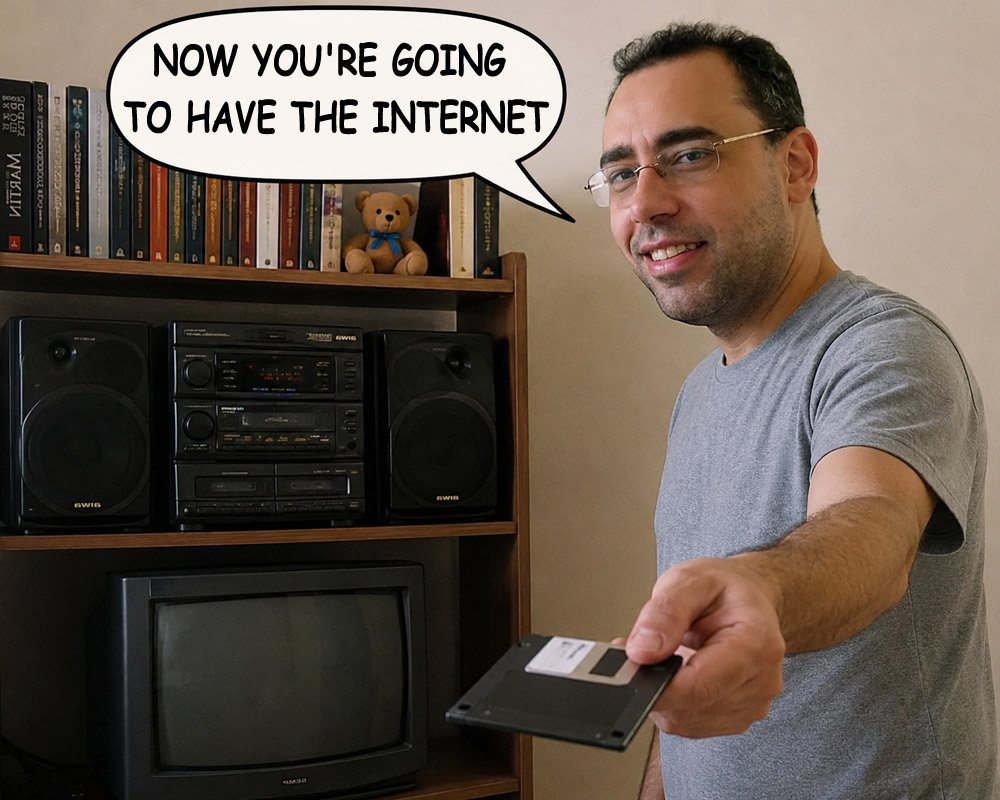
Out of nowhere, he looked at me and said something completely unexpected: "Now
You're Going to Have the Internet!" He handed me a 3.5-inch floppy disk—the kind
that could hold the enormous amount of 1.44 MB—and a folded sheet of paper held
together with a rubber band. The paper contained instructions, passwords, and
everything needed to 'install' the Internet on my computer. The software
included Trumpet Winsock for the connection itself and Netscape Navigator 1.1
for browsing the Web. Since he still didn't have a computer equipped with a
modem, he decided to give me those files as a gift. The Internet service
provider would be APCD (São Paulo Dental Surgeons Association), through an
account belonging to his father.
LET THERE BE LIGHT
Everything worked perfectly. Within moments, we heard that unforgettable
sound—the strange electronic handshake of a modem connecting to a telephone
line. At that instant, we experienced our first glimpse of what would eventually
become a lifetime connected to the Internet.
A pilgrimage - Naturally, nothing resembled the Internet we
know today. What passed for social media back then were the Bulletin Board
Systems (BBSs): black screens filled with plain text and no images. There we
could download files, play games, exchange messages, and participate in
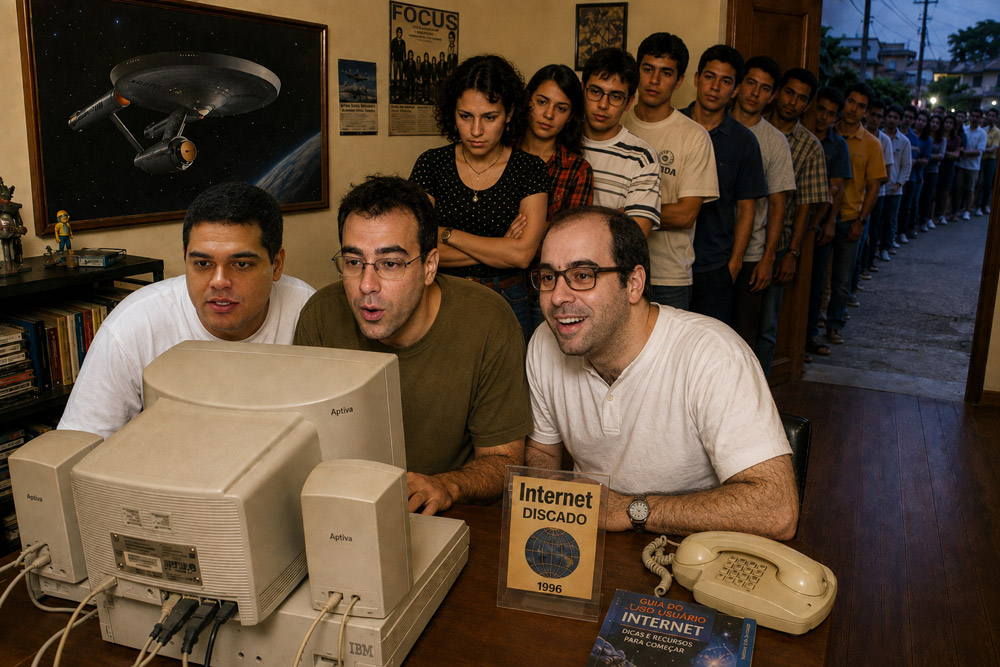
text-based discussion forums. Before long, my house became something of a
'Mecca' for friends. Almost every evening they would come over, eager to
experience and understand this mysterious thing called the Internet—a subject
everyone had heard about, but almost nobody had actually seen.
Even the main storyline of one of Brazil's most popular television soap operas
at the time, Explode Coração, revolved around the Internet. That helped spark
the curiosity of millions of people who had never even touched a computer.
Pandora's Box - Commercial Internet
access in Brazil officially began in 1996, thanks to the Minister of
Communications, Sérgio Motta, who decided that the Internet should be made
available to the general public rather than remain restricted to academic
institutions.
Today it seems almost unbelievable that the government once considered keeping
the Internet confined to such a limited environment. At the time, however, that
idea seemed perfectly reasonable. Looking back, it gives us a clear sense of how
dramatically the world has changed—although even today many governments still
attempt to regulate or control the very Pandora's Box they helped open.
The movement is static - Brazil's
first major Internet portal, UOL, had begun operating only a few months earlier,
in April 1996. The profession of "webmaster" didn't even exist yet. Most
websites were static pages, usually created by enthusiastic amateurs. User
interaction was minimal. At best, an animated GIF would provide the illusion of
movement. Streaming video was simply unimaginable over a 14.4 kbps dial-up
connection. Yet those primitive websites fascinated us. Until then, virtually
all of our information came from books, magazines, television, or radio.
Suddenly, a completely new source of knowledge had appeared.
People eagerly searched for information on politics,
the arts, science, hobbies, and, naturally, sex. As for me, being completely
obsessed with music, I immediately searched for my favorite artists: Focus,
Gentle Giant, Van der Graaf Generator, Santana, Mahavishnu Orchestra, Jethro
Tull, Premiata Forneria Marconi (PFM), Frank Zappa, and many others. To my
disappointment, however, I found very little information about the band I loved
most: Focus.
AND IT ALL STARTED WITH A MOUSE... AND A
NOTEPAD!
One weekend I visited an acquaintance of mine,
Alexandre Fejes Neto, a respected figure in Brazil's computer industry. He had
served as editor of the Brazilian edition of PC Magazine and had also hosted a
computer technology program on Rádio USP.
Radio for deaf people - Alexandre had developed an
extraordinary project: the world's first radio program designed for deaf
listeners. Instead of transmitting spoken information, the broadcast carried
digital data encoded as audio signals. A software program running on the
listener's PC decoded those sounds through the computer's sound card and
transformed them into readable information displayed on the screen. In other
words, even someone who could not hear could receive information broadcast over
conventional radio waves. The project earned him national recognition and
awards.
After noticing how fascinated I was with the Internet and everything surrounding
it, he suddenly asked me: "Why don't you create a website?" The question caught
me completely off guard. I remember thinking to myself: "Does he think I'm some
kind of computer genius?" I replied that I had absolutely no idea how to build a
website. "It's simple," he answered. "Just write an HTML page using Windows
Notepad." That single sentence would change everything.
I went home with that idea stuck in my head. Of course, I could have searched
the Internet to learn how to create a website, but, by coincidence, I already
had a computer magazine containing an introductory article on HTML commands. I
wasted no time. After reading it for just a few minutes, I sat down in front of
my computer and created my very first web page using nothing more than Windows
Notepad. It displayed my photograph in the center of the page along with a short
block of text. It worked!
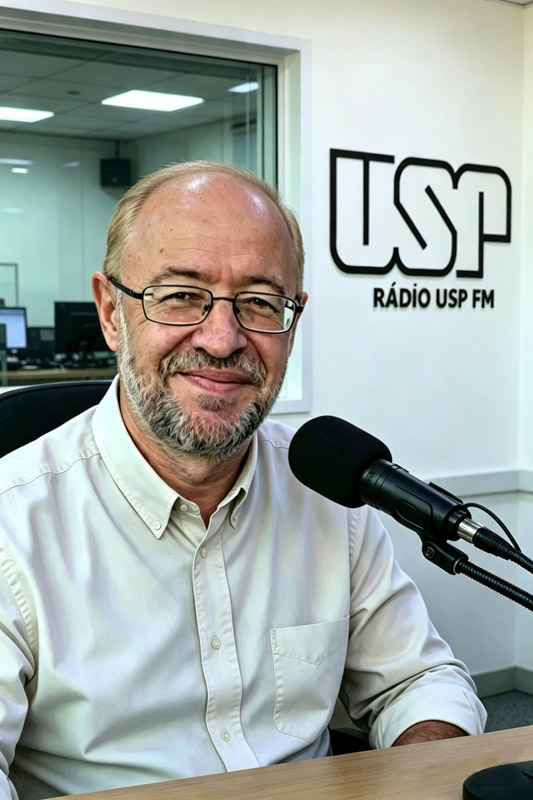
Alexandre Fejes Neto
"PERCHÉ NON PARLI?!," AS MICHELANGELO WOULD
SAY
From that day on, my entire focus would be on building
a website worthy of Focus—forgive the pun. Using my HP flatbed scanner, I began
digitizing the band's LP covers. I gathered every piece of information I had
collected over the years. The most important source was the band's biography
published in Rock Progressivo, written by Valdir Montanari—the first major
Brazilian book dedicated to progressive rock, published in 1985.
Synergy - Years later, when Focus
launched its own official website, that very same biography by Montanari was
adopted as the band's official biography, something that made the author
immensely proud, as he later told me personally. It is worth mentioning that
Montanari also hosted Sinergia, a progressive rock radio program broadcast by
Rádio USP during the late 1980s. One of the show's signature themes was "Harem
Scarem" by Focus.
Click the buttons below to listen to a clip from the
SINERGIA program that was aired on May 25, 1987, on 97 FM:
Between August and October of 1996, I worked
tirelessly on the HTML files and images that would eventually become the
website. Then, on November 5, 1996, after weeks of work, the FOCUS TRIBUTE
HOMEPAGE officially went online. It was hosted on GeoCities, the free
web-hosting service that became enormously popular during the early years of the
Web. The site would remain there for many years, until GeoCities eventually shut
down, forcing me to move it to its own independent domain.
Compared with what it has become today, the website contained relatively little
information. Even so, I honestly believe it was the best Focus website available
anywhere at the time. I still remember another Focus webmaster telling me one
day: "It seems you're more dedicated to having a Focus website than I am." He
was right. I was completely absorbed by the project. Whenever I found myself
near a computer, I took the opportunity to show people my creation. I was
constantly experimenting with new HTML techniques, improving the site's
appearance and navigation. Almost every day visitors could notice something new.
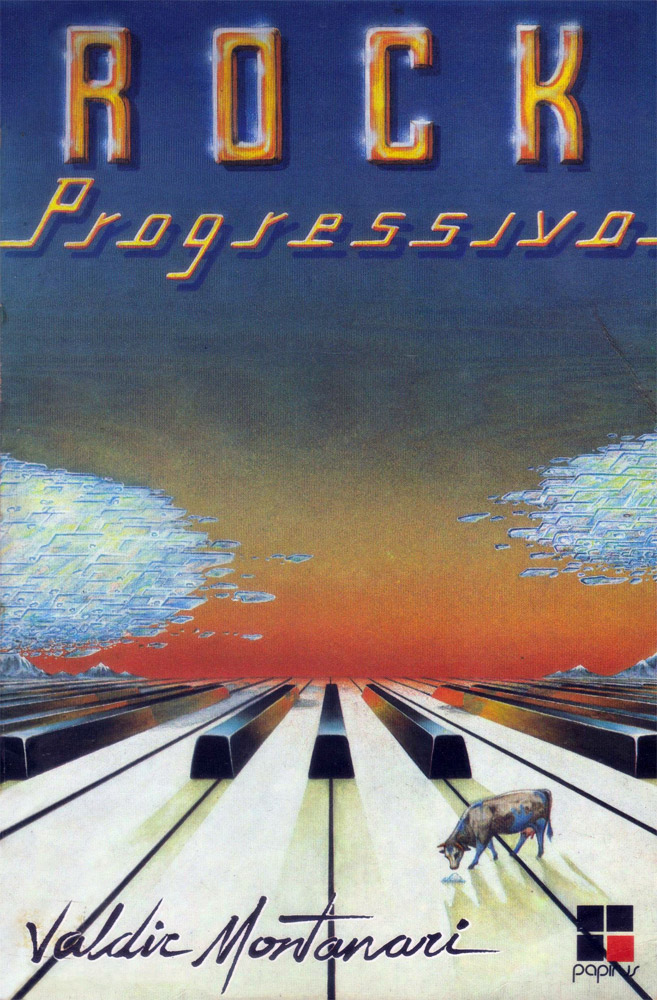
The Progressive Rock book, from Valdir Montanari.
His Focus biography was used by the Focus' Oficial Site
Do you have a Website? - One
afternoon I visited QD Editora, the publishing company where I worked -and still
work today. Our director, Luciano, enthusiastically announced that the company
finally had its own website. He proudly showed me every page. "It looks great,"
I said sincerely. Then I added: "Would you like to see my website?" He looked at
me with genuine surprise. "Do you have a website too?" I explained that it
wasn't exactly a personal website, but one I had created for a Dutch rock band
called Focus.
After browsing through several pages, he turned to me
and said something I have never forgotten: "If I'd known you could build
websites like this, I would have hired you to create ours!" To me, that was far
more than a compliment. It was the encouragement I needed to continue.
Over the following years, for a variety of reasons, I
ended up designing websites for several companies during the turn of the
millennium (without bugs). But that's another story - one I hope to tell someday.

HOLLYWOOD IS LOOKING FOR THIJS VAN LEER
What I never imagined was the impact the website would
soon have. Because there was an enormous demand for information and so few
websites available, people from all over the world began contacting me almost
immediately after the site went online in November 1996. Most wanted to know
where they could buy Focus CDs or Thijs Van Leer's solo albums.
One e-mail, however, deserves special mention. It came
from someone introducing himself as a Hollywood film composer and music
producer. He was the real thing. His name was Mark Mancina. Among his credits
were the soundtracks for major Hollywood productions and record production work
with bands such as Emerson, Lake & Palmer and Yes. I have reproduced his e-mail
below exactly as I received it:
“10/dez/97 Rodrigo: My name is
Mark Mancina and I am a film composer (Speed, Twister, Conair) and record
producer (ELP and YES). I can't find any of the Van Leer Introspection cds
anywhere here in the states. Do you know where I could order them? I'd really
appreciate your help. thanks Mark Mancina”
At that time, websites like Amazon and eBay were still
in their infancy, and finding rare CDs online was genuinely difficult. That
e-mail became definitive proof that my website was being visited by people all
over the world. And if Hollywood had discovered it... ...then the rest of the
world probably had as well. It was an extraordinary feeling.
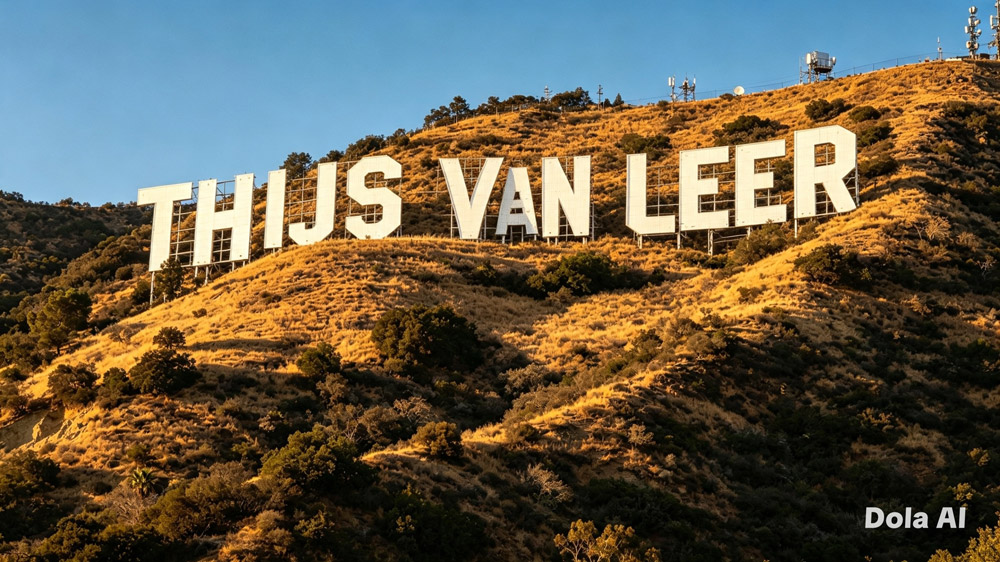
DID YOU KNOW FOCUS IS BACK?
Throughout the decades that the website has been
online, I have received invaluable help from countless fans and contributors.
There are simply too many to name individually. They came from England, the
Netherlands, Denmark, Australia, the United States, Brazil, Spain, Japan,
Argentina, Russia, France, Portugal, and many other countries.
The Focus Army - Among them, however, a few deserve special
recognition: Peet Johnson, from Australia. He wrote what is undoubtedly the most
comprehensive biography ever published about Focus—a book I will mention again
later in this story. Steffen Staugaard, from Denmark, is both an outstanding
musician and, without question, the country's greatest Focus fan. I should also
mention Bert Monster, Irene Heinicke, and Jan van Beek from the Netherlands. Jan
was the founder of the band's official fan club during the 1970s—the FFA (Focus
Fan Association).
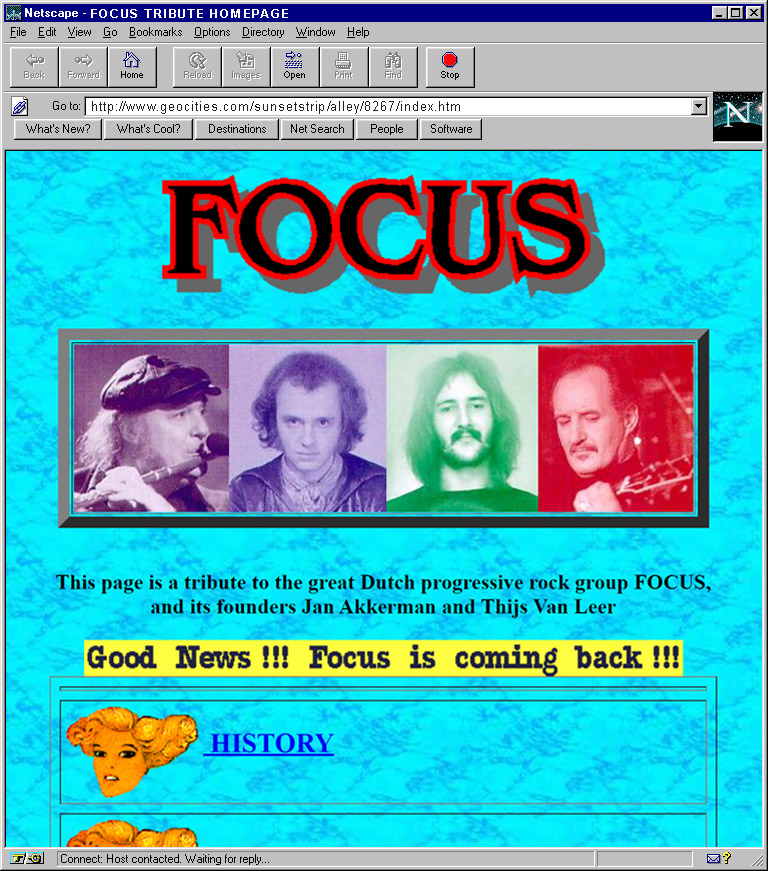
The first Focus' site layout (1996)
Tim Baugh - Among all the messages I have received through the website,
one of the most important came from Timothy Baugh, whom I consider perhaps the
greatest Focus fan I have ever known. Tim deserves special recognition because
he was one of the very first people to contact me and because of his
extraordinary generosity. Over the years he shared with me an enormous amount of
material from his personal archives, helping transform the website into what it
eventually became.
His very first message was:
“18/abr/97. Did you know that
Focus have reformed with Thijs van Leer, Bert Ruiter, Hans Cleuver and Wiliam
van Dike on guitar? Let me know if you want more details. Tim Baugh, England.”
Needless to say, that news immediately captured my
attention. Focus was getting back together? What incredible news! From that day
forward, Tim and I exchanged e-mails on a regular basis.
Thanks to Tim, the digital edition of the Oxford Encyclopedia even included, for
a period of time, an entry mentioning the Focus website—something that filled
both of us with enormous pride.
Sadly, Tim is no longer with us. Yet his contribution lives on throughout the
website, in every photograph, document, and piece of information credited to
him. Perhaps I never thanked him enough while he was alive. So let me do it
here. THANK YOU, TIM! From the very beginning, he offered to help me with the
website. And he certainly did.
Even so, it would still take another five years before the reunited Focus
finally returned to the stage and began touring the world once again.
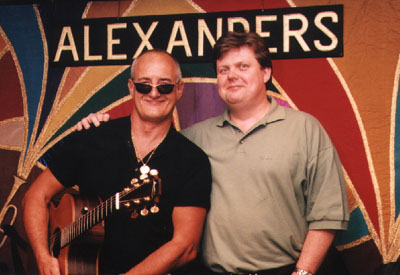
Jan Akkerman and Tim Baugh - Chester-UK, July
27, 1998
The Writer of Oz - One of the most
significant events of these thirty years also deserves to be recorded here. In
2013, my friend Peet Johnson published 'Hocus
Pocus: The Strife & Times Of Rock's Dutch Masters' - the definitive biography of Focus.
Peet is one of the most passionate Focus fans I have
ever known and has been an invaluable contributor to the website for many years.
Working from his home in Australia, he devoted years to researching the band's
history. The book is based on dozens of interviews, extensive archival research,
and countless documents relating to every stage of Focus's career. It also
includes contributions from the band members themselves. The result is, in my
opinion, the most complete, accurate, and authoritative account of Focus ever
published. I wholeheartedly recommend it to anyone who wants to understand the
band's remarkable journey.
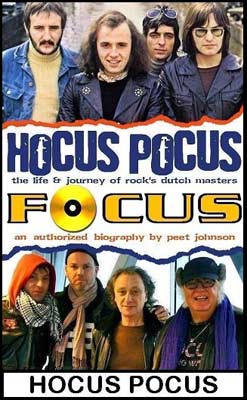
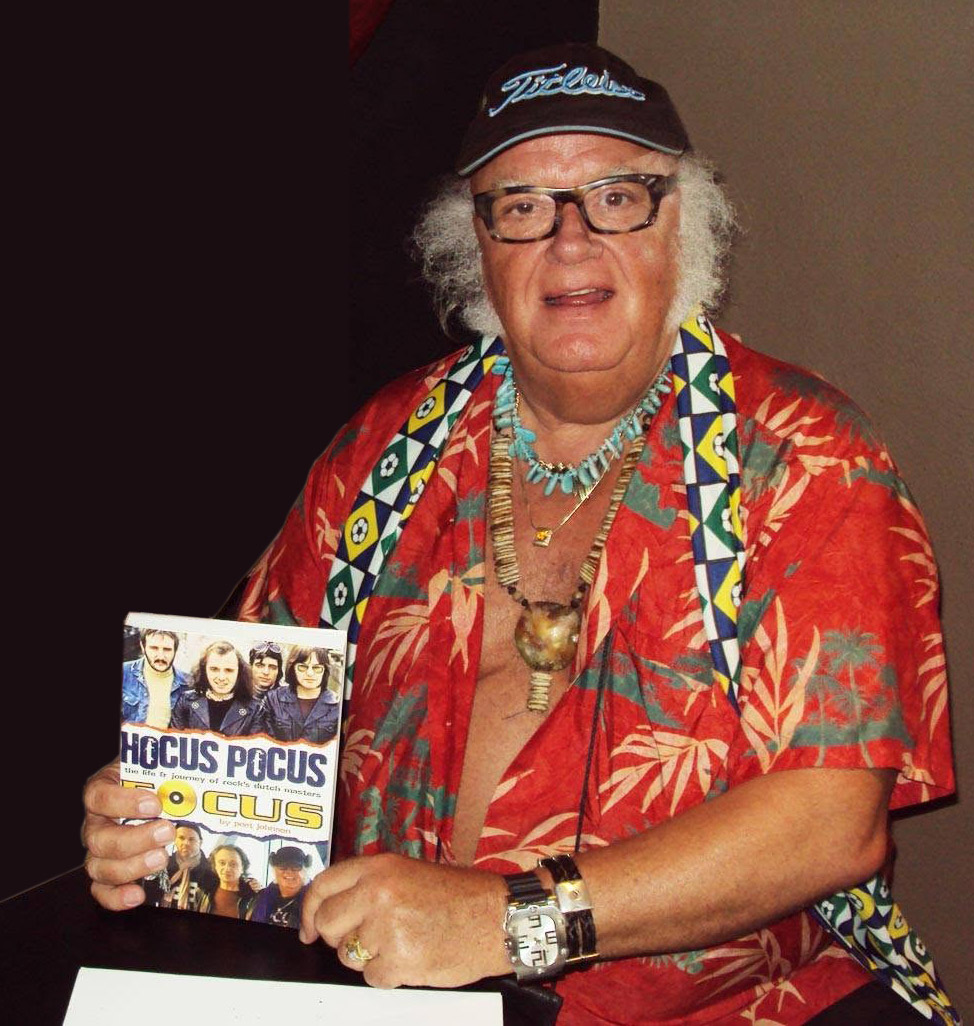
The most complete Focus Biography, from Peet Johnson
THE SOUTHERN HEMISPHERE DOES EXIST!
I realize that, back in the 1970s, Brazil seemed like a very distant place to
much of the world. Very little of international significance happened here, and
we lived through an almost endless succession of political and economic
crises—something that, unfortunately, has not changed all that much over the
past fifty years. People often said that touring South America simply wasn't
worth the effort. The distances were enormous, the costs were high, and the
logistics were exhausting.
From memory, I can recall only a handful of major international artists who
ventured here during the first half of the 1970s: David Clayton-Thomas of Blood,
Sweat & Tears (1972), Santana (1973), Alice Cooper and Miles Davis (1974), Rick
Wakeman and the Jackson Five (1975).
Most of those artists were already on large-scale world tours, making South
America merely one additional stop along the way. Unfortunately, the greatest
progressive rock bands never came: Focus, Yes, PFM, Pink Floyd, Jethro Tull,
Gentle Giant, King Crimson, Camel, and many others. We never had the opportunity
to see them during the peak of their creative years.
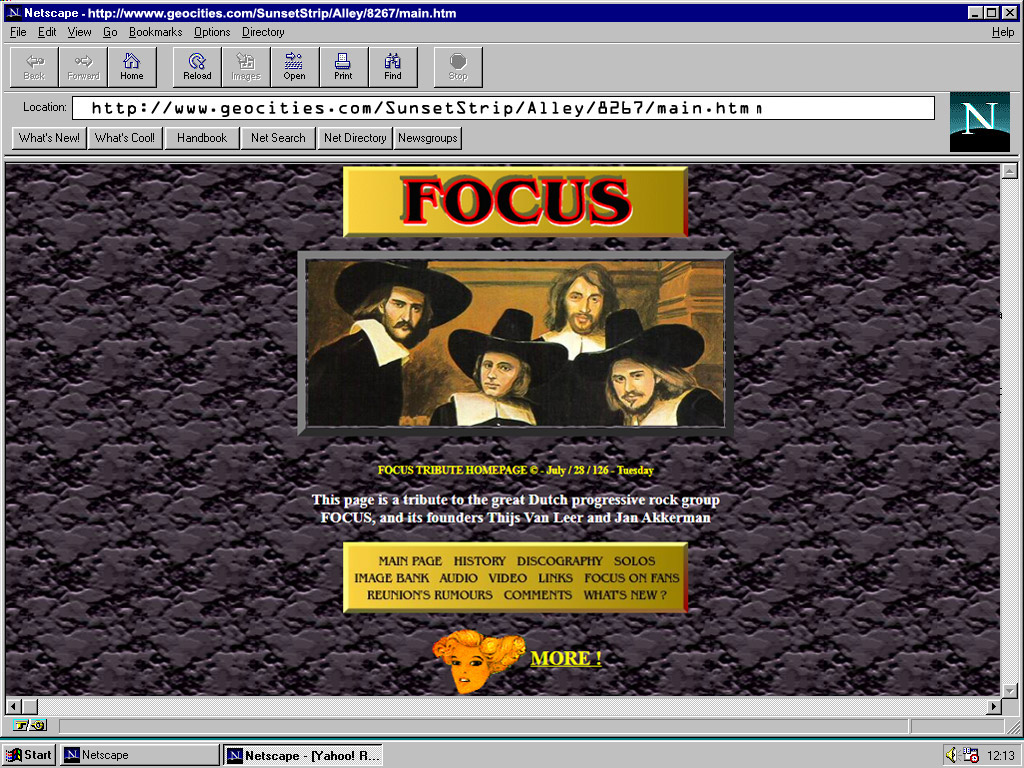
The second Focus' site layout (2000)
Back to the Future - Let's return to
1996. As I mentioned earlier, there were no social media platforms as we know
them today. There were no smartphones, either. The relatively small number of
people who had Internet access discovered new information almost exclusively
through websites. Most of those sites were amateur productions, yet many already
contained remarkably valuable content. One resource that deserves special
mention was the Gibraltar Encyclopedia of Progressive Rock (GEPR), an
outstanding online reference covering virtually every progressive rock band
imaginable. Sadly, it no longer exists.
Day after day, more people came online, eager for
information. The Focus website began attracting visitors from all over the
world. Along with those visitors came interaction. People exchanged e-mails,
many of which I published on the website itself in the section called "Focus On
Fans." Soon people realized something rather unusual: The world's largest Focus
website was being produced... in Brazil. To me, that never seemed strange. After
all, Jan Akkerman's official website, Akkernet, was maintained in England by an
English fan. That has always been the true spirit of the Internet: knowledge has
no borders.
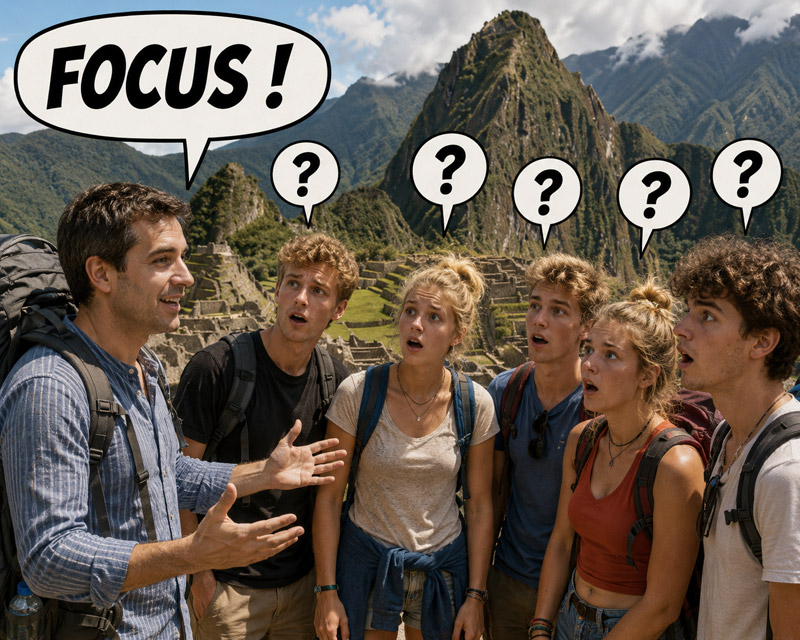
Inca Roads - But not everyone knew Focus. Whether people know an artist often
depends on their generation. I remember a story told to me by a dear family
friend, Fernando, who was also a devoted Focus fan. In the late 1990s, while
visiting the famous ruins of Machu Picchu in Peru, he met a group of young Dutch
backpackers. Trying to start a conversation, he smiled and proudly said: "I'm a
huge fan of the Dutch band Focus!" The reaction was not what he expected. The
young people looked at each other with complete confusion. Not one of them had
ever heard of Focus.
Later I shared that story personally with Thijs van
Leer. I could tell he was genuinely disappointed. At that moment it became clear
to me that Focus deserved to be rediscovered by an entirely new generation.
Young listeners deserved the opportunity to experience the extraordinary
artistry of these remarkable musicians.

So Brazil Knows Focus? - Yes. It certainly does. Just like in
many other countries, "Hocus Pocus" received considerable radio airplay
throughout Brazil during the 1970s. Every Focus album was officially released
here by PolyGram. It doesn't surprise me that word about the website eventually
reached the band itself. In fact, I have always believed that learning they had
a loyal and enthusiastic audience in South America played a role in Focus
deciding to include the continent in its worldwide reunion tour beginning in
2002.
When the band's manager at the time, Willem Hubers, sent me an advance
promotional copy of the new album Focus 8, I was absolutely thrilled. Inside the
booklet he included a personal acknowledgment thanking me "for keeping the
website alive." That single sentence meant more to me than words can express. It
confirmed that the band not only knew about my work... ...they genuinely
appreciated it.

The text inside the promotional edition of
Focus 8, with the acknowledgment for the Site
Now we knew that Focus had resumed its activities and that the band was aware they had fans in Brazil. Therefore, in the following pages I will describe my personal experiences with the band's visits to my country beginning in 2002, as these are events that I personally experienced.
CROSSING THE EQUATOR LINE
Nothing could have prepared me for the excitement I
felt when I learned that Focus would finally perform in Brazil. After all those
years, the moment I had dreamed about was becoming reality. I was finally going
to hear those unforgettable compositions performed live—in my own country.
Focus 8 – In 2002, after performing in several South American
capitals, the band's first Brazilian concert would take place in Rio de Janeiro.
At the time I was living in São Paulo, more than 400 kilometers away. The
performance was part of the Rio Art Rock Festival. Because I had helped promote
the event through the Focus website, the festival organizers invited me as their
guest. My seat was at the very first table, directly in front of the stage.
Before the concert, however, I had already met the band at their hotel. Between 2002 and 2003 I had the privilege of
accompanying the band at several events in Rio de Janeiro and São Paulo,
spending time with that unforgettable lineup both on and off the stage.

Focus in Family - Later in 2002 I was
able to present Thijs van Leer with a painting I had created based on the cover
of his solo album Bach for a New Age. He was genuinely touched by the gift.
During one of his later visits, he told me that he had proudly hung the painting
in one of the main hallways of his home. Then, smiling, he added that his wife
had eventually asked him to move it somewhere else because, according to her,
she had grown tired of seeing his face every time she walked through the house.
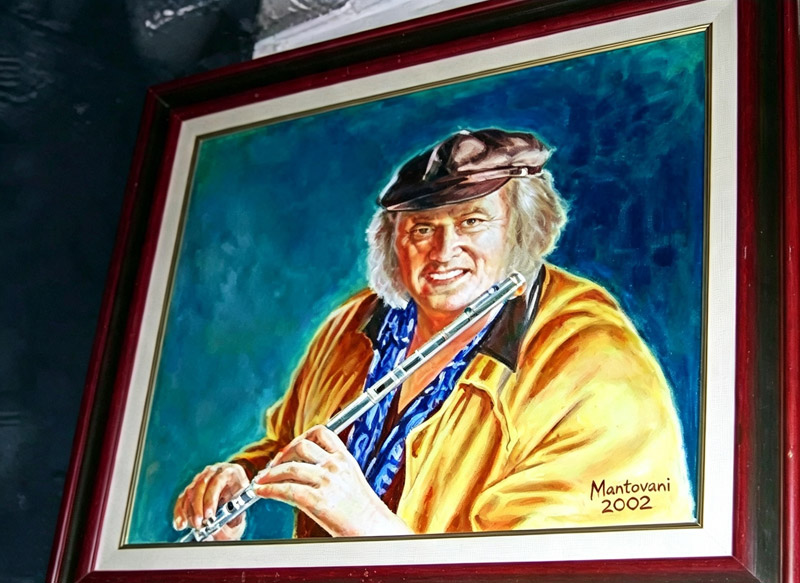
The painting I did and gave to Thijs Van Leer
as a gift, which had to be moved
I should also mention another great Brazilian Focus
fan—my friend Altino. Together with his wife and children, he personally
welcomed the band at the airport on several occasions and helped organize
memorable gatherings with both the musicians and Brazilian fans. They even
created T-shirts bearing the phrase "Focus in Family." Thijs proudly wore those
shirts during concerts around the world. For years people wondered what "Focus
in Family" actually meant. Now you know.
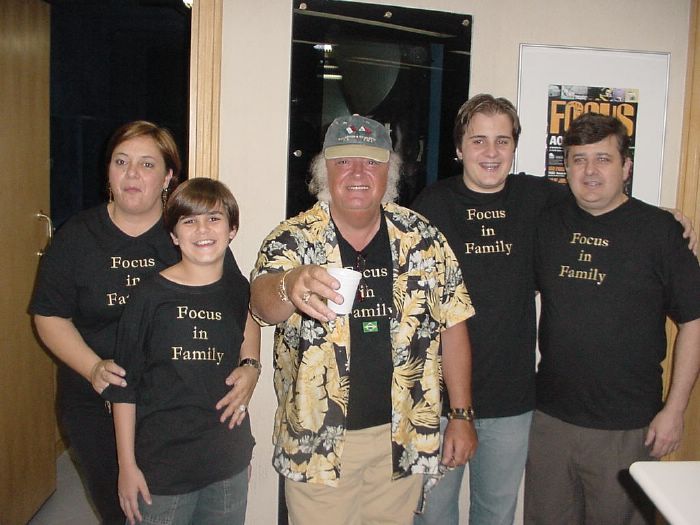
Thijs Van Leer and the Focus Family, at Kiss FM -
São Paulo, 09 May, 2005
Did You Say... Thijs van Leer? - By
then, my enthusiasm for Focus had become contagious. Even my mother had become
interested in the band. She learned the musicians' names and enjoyed hearing me
tell stories about my adventures with them.
One day she was talking with one of my cousins about my frequent trips to see
Focus. When she happened to mention the name Thijs van Leer, my cousin suddenly
stopped and looked at her in surprise, and asked: "Did you say Thijs van Leer?"
As it turned out, her husband had worked for Philips and had lived in the
Netherlands for several years during the 1970s after being transferred to the
company's headquarters.
Like my own father, he preferred Brazilian popular music and classical music. So
while the name Focus meant little to them, Thijs van Leer immediately rang a
bell. She smiled and said: "We have one of Thijs van Leer's LPs at home. Tell
Rodrigo I'll save it for him." It was most likely one of the Introspection
albums.
Unfortunately, I have never received that record. Perhaps it still exists
somewhere, carefully stored away. And if you're reading this, Silvia—and yes,
purely by coincidence your name is the same as one of Focus's best-known songs—I
hope you're still keeping that LP safe for me!
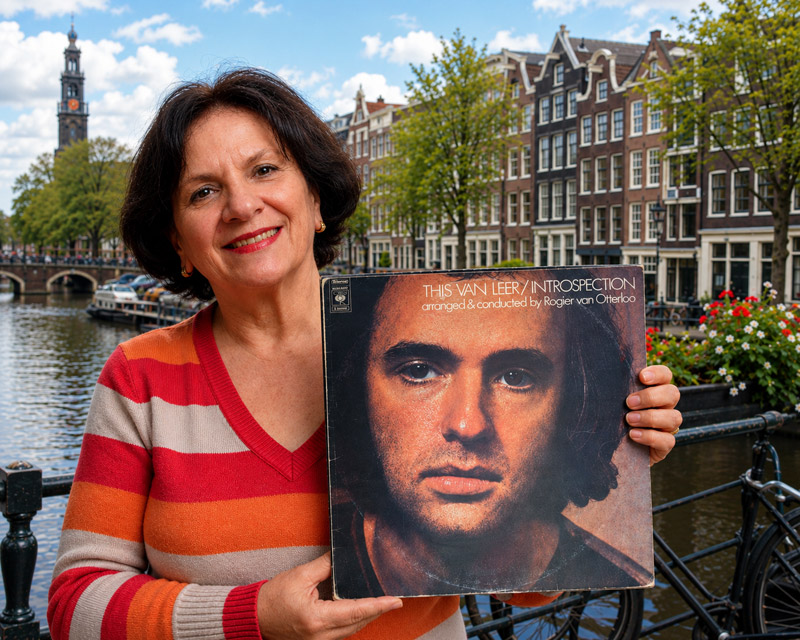
Silvia and Thijs Van Leer
"Tom Jobam?" - In March 2003, one day before Focus performed in São
Paulo, several fans and I met the band at their hotel. Thijs told us he wanted
to attend what he believed was a tribute concert dedicated to the legendary
Brazilian composer Tom Jobim. So we took him—and drummer Bert Smaak—to SESC
Pompeia, one of São Paulo's best-known cultural centers. The rest of the band
stayed behind at the hotel.
As the performance unfolded, however, Thijs seemed increasingly puzzled. He
didn't recognize a single composition. Only afterward did we discover the
misunderstanding. The concert was not a tribute to Tom Jobim. It honored another
Brazilian composer named Jobam—João Batista Martins. The similarity between the
names had caused the confusion. Fortunately, the mistake turned out to be a
wonderful surprise. Both Thijs and Bert thoroughly enjoyed the performance,
which celebrated Brazilian instrumental music and featured outstanding musicians
such as Banda Mantiqueira, Bocato, Alex Bessa, Silvinho Mazuca, and many others.
After the concert, the musicians invited us backstage to chat for a while. Not
long afterward, they suggested we all head to a jazz club called Garoa, located
in São Paulo's southern district. It was an intimate venue, with a small stage
and walls decorated with classic jazz album covers. We gladly accepted.
After dinner and a few drinks, Thijs asked for a microphone. Moments later, he
was on stage, improvising with the house musicians in an unforgettable jam
session. One of the musicians present, Michel Freidenson, told Thijs how much he
loved the composition "Focus V." He even confessed that it had been the
soundtrack to his wedding. Smiling, Thijs immediately sat down and played it.
Michel was overwhelmed with emotion.
On the stage stood an upright bass belonging to the late American musician Pete
Woolley. Our friend Elias Frederico, another passionate Focus fan, was invited
to play alongside Thijs. That evening, one of his lifelong dreams came true.
After that magical night, Michel Freidenson and Thijs van Leer became close
friends—a friendship that would later lead to another remarkable chapter in this
story.
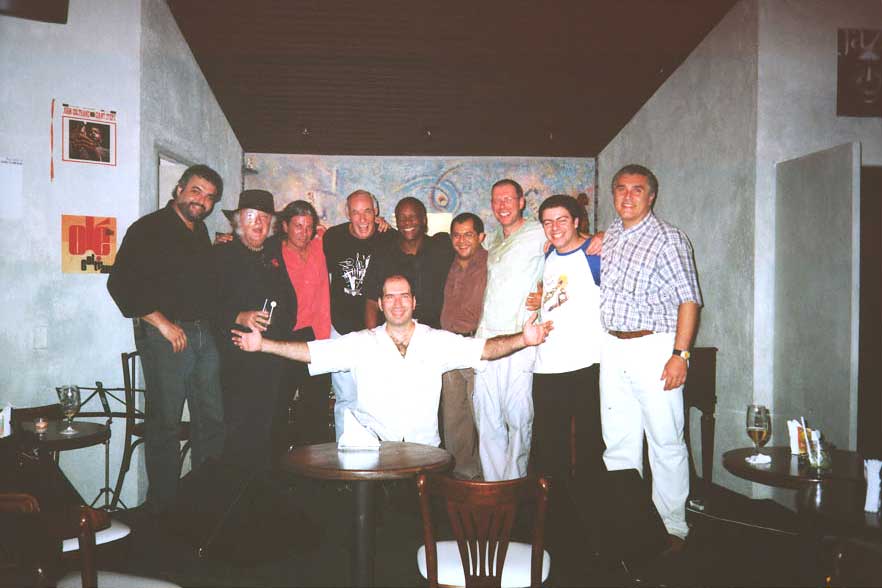
The magic night at the Garoa Bar in March, 13
- 2003 - From left to right: Michel Freidenson, Thijs Van Leer, Silvinho Mazuca,
Pete Woolley (in memoriam), Walmir Gil, Nailor Azevedo, Bert Smaak, Fabio Sales
and Elias Frederico.
Barbecue Session - In 2005, together
with a large group of Brazilian fans, we organized a huge barbecue at Elias
Frederico's home. Focus was our guest. The afternoon naturally evolved into
another spontaneous jam session. Among those present were outstanding Brazilian
musicians such as Michel Freidenson and Nuno Mindelis, who had been named Best
Blues Guitarist in the World by Guitar Player magazine in 1998. It was one of
those rare occasions when there was no clear line separating musicians from
fans. Everyone shared the same table, the same conversations, and above all, the
same love of music.
From then on, Focus became a regular visitor to
Brazil. I fondly remember the tours of 2010, 2012, 2014, and 2017. Whenever they
came, our group of fans would reunite with the band. Every visit felt less like
meeting famous musicians and more like welcoming old friends. Those were magical
moments, filled with laughter, friendship, unforgettable conversations, and,
naturally, wonderful music.
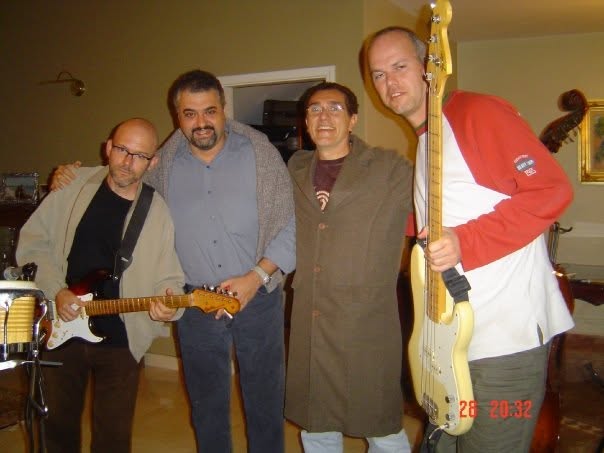
Barbecue and Jam-Session with the fans in São
Paulo, May, 28 - 2005. From left to right: Nuno Mindelis, Michel
Freidenson, Elias Frederico and Bobby Jacobs
OUR BIGGEST MISTAKE
During my very first meeting with Thijs van Leer, I
asked him why Focus had never performed in Brazil during the 1970s. Without
hesitation, he replied: "That was our biggest mistake." Judging by everything
that happened afterward, it was a mistake the band genuinely tried to correct,
returning to Brazil again and again over the years.
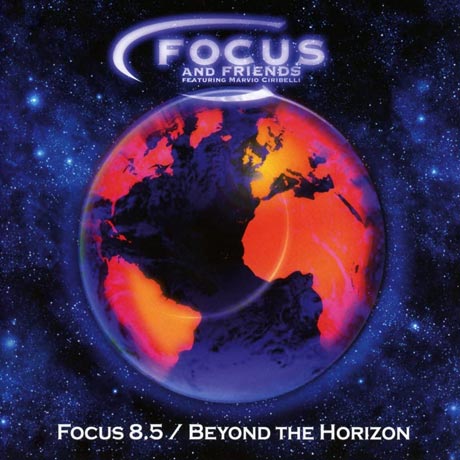
One clear example was their growing collaboration with
Brazilian musicians. The fact that guitarist Jan Dumée had lived in Brazil for
some time and spoke Portuguese fluently made those collaborations much easier.
Perhaps the finest result of this cultural exchange was the release of Focus 8.5
– Beyond the Horizon, also known as Focus And Friends, in 2016. The album
brought together Dutch and Brazilian musicians in a remarkable blend of jazz,
fusion, and world music, under the musical direction of Brazilian pianist and
composer Márvio Ciribelli. An interesting footnote is that Márvio's sister,
Milena Ciribelli, one of Brazil's best-known television sports presenters, is
also a great admirer of Focus.
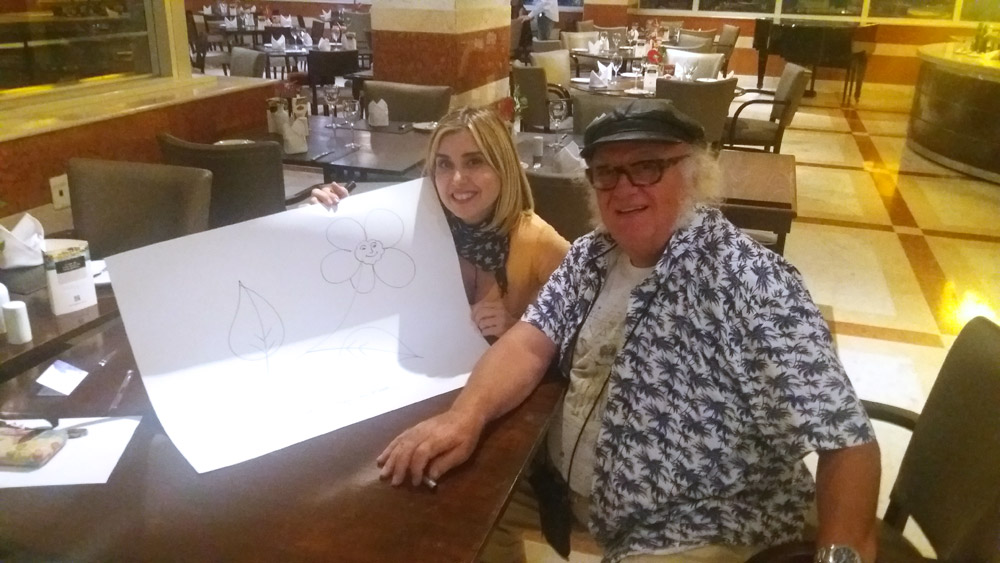
Milena and the drawing she got from Thijs Van
Leer - São Paulo, September, 16 - 2017
North Sea - Another Brazilian
musician with an international career, Michel Freidenson, once shared a
wonderful story with me. In 2004, after performing with the Michel Freidenson
Jazz Quartet at the prestigious North Sea Jazz Festival, he called Thijs van
Leer and asked whether he might stop by his home in the Netherlands. Thijs
replied that he could spare about half an hour. That "half-hour visit" ended up
lasting the entire day. The two musicians talked, played together, and
eventually enjoyed a private jam session. Sadly, no one thought to record it.
For Focus fans like us, that remains one of those unforgettable musical moments
that exists only in the memories of those fortunate enough to be there.
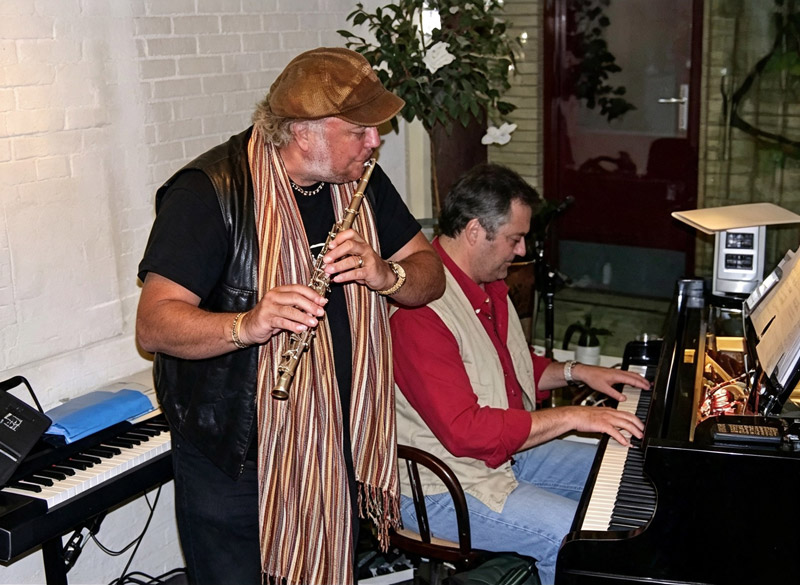
Michel Freidenson visiting Thijs Van Leer at
his house in Holland, July - 2004
South Sea - I cannot fail to mention an event that marked Focus's visit
to Brazil in 2005. It was the trips that the fans took with the band to the
coastal city of Ubatuba, on the northern coast of the state of São Paulo.
Fortunately, I was invited to join them on one of these visits. Ubatuba is a true
paradise, with more than 90 beaches, each more beautiful than the last. Thijs
van Leer simply fell in love with the place and asked to return. Bobby was
equally impressed by its beauty and named one of the songs on the band's next
album, Focus 9 / New Skin, "Sylvia's Stepson - Ubatuba."
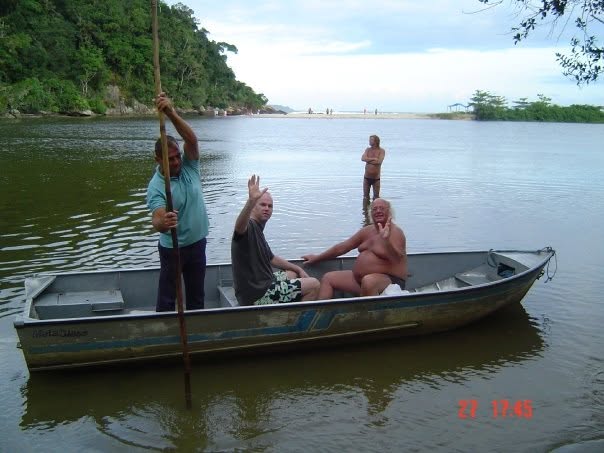
Bobby Jacobs, Geert and Thijs Van Leer in
Ubatuba - 2005
CONCLUSION
From the earliest days of the Internet, websites were designed primarily to be
viewed on desktop computers. Over time, however, websites gradually lost some of
the novelty and excitement they once possessed. Today, Focus has its own
official website. Social media, streaming services, smartphones, and countless
other technologies have transformed the way people discover music and consume
information. Like everyone else, the band adapted to this new reality.
Focus is now present across social media platforms, streaming services, and
countless digital channels, reaching audiences that were not even born when the
very first version of the Focus Tribute Homepage appeared on GeoCities on
November 5, 1996. One excellent example is Elias Veine Viig, from Norway, whom I
consider one of the greatest representatives of the new generation of Focus
fans.
Focus at Rainbow or Focus at Youtube? - Today, anyone can
simply open YouTube and listen to virtually every Focus album or watch the once
legendary Focus Live at the Rainbow concert. Years ago, I received countless
e-mails from fans desperately searching for a copy of that VHS recording.
Ironically, for many years the only version available was a television recording
made from the Brazilian program Rock Concert during the 1970s. Today, that
concert—and many others—has finally been released officially.
As a result, the role of the Focus website has naturally evolved. Its mission is
no longer simply to introduce people to the band. Instead, it has become a
central archive—a place where fans can find the most complete collection of
information available anywhere about Focus. Every article, photograph,
interview, recording, document, and historical detail has been gathered over
three decades through the generosity of contributors from every corner of the
world. In many respects, the website now contains even more information than can
be found on Wikipedia.
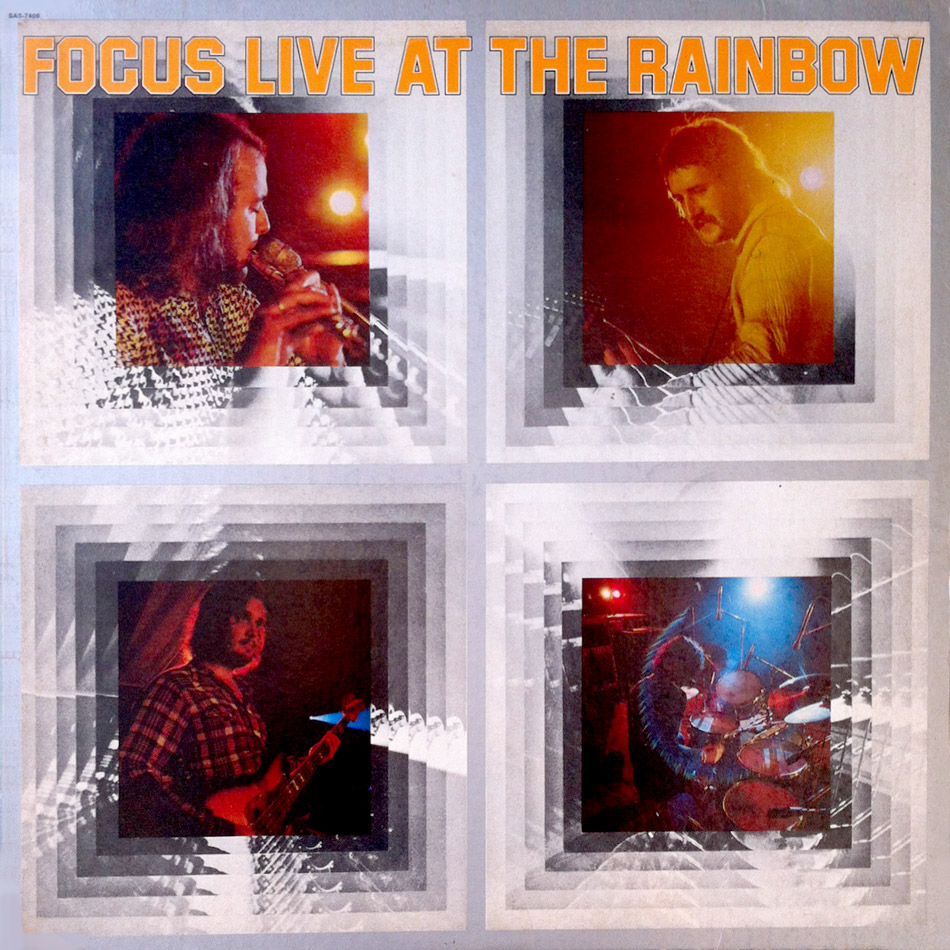
During the years, every Focus fan looked for
the video footage of this famous presentation
Moving waves - During the thirty
years that the website has existed, life has changed for everyone—including
Focus. Sadly, we lost dear friends along the way: Tim Baugh, Bert Ruiter, Hans
Cleuver, Willem Hubers. Each of them played an important role in this remarkable
journey. The band's lineup also evolved. Pierre van der Linden returned. Jacobs
and Dumée moved on. Menno Gootjes and Udo Pannekeet joined the group, bringing
fresh energy while preserving the musical spirit that has defined Focus for more
than half a century.
As I write these words in 2026, I am happy to know
that Focus remains as active as ever, touring throughout Europe exactly thirty
years after my website first went online. On the website's Live Records Known To
Exist (LRKTE) section, I continue documenting every known concert recording
preserved by fans around the world—a living archive that continues to grow year
after year.
Making History - A few days ago,
while watching the History Channel, I came across a documentary about the early
days of Amazon and eBay during the 1990s. As I watched, I found myself thinking:
"I lived through that era too." From the comfort of my living room, I was
watching the story of a technological revolution in which, in my own modest way,
I had also taken part. For a brief moment, I allowed myself to imagine something
completely impossible. Perhaps one day the History Channel might produce a
documentary about the creation of the world's largest website dedicated to
Focus. No... Probably not. I'm just dreaming.

Having lived through those magical early years of the Internet—and having been
able to contribute to them by building a website dedicated to artists I have
admired throughout my life—has brought me immense personal satisfaction. When I
look back on everything good that has happened to me, I have no doubt that this
project ranks among the most meaningful experiences of my life. The website has
never simply been a collection of pages. It has introduced me to extraordinary
people. It has created friendships that span continents. It has opened doors I
never imagined could exist. And above all, it has allowed me to give something
back to the music that has brought me so much happiness over the years.
To Infinity... and Beyond! - One day
I told my wife that I had started writing a short text to celebrate the
website's thirtieth anniversary. At some point I realized that I had already
written more than fifteen pages. She smiled and asked: "Who's going to read all
of that?" I laughed and answered: "Probably no one." I wasn't writing it for an
audience. I was writing it so that I would never forget everything wonderful
that had happened along this incredible journey.
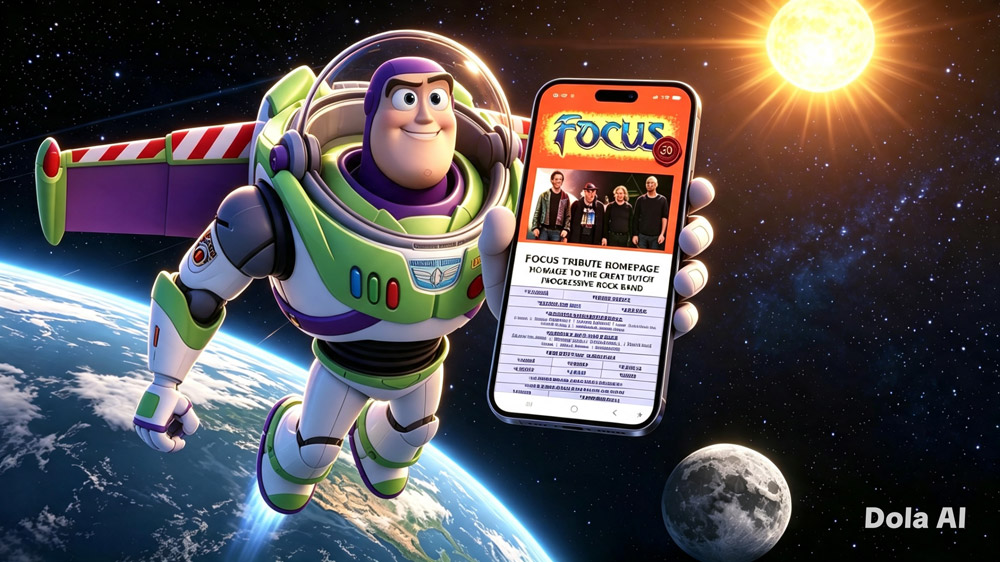
And now, sitting once again in front of my computer as
I type these final lines, I can only hope that this adventure will continue for
at least another thirty years.
Thank you to everyone who has been part of this story.
See you online.
Warm regards,
Rodrigo Mantovani
Focus Tribute Homepage Webmaster
rodrigo.mantovani@gmail.com
mpq.com.br/focus
July 2026.
ACKNOWLEDGMENTS:
Peet Johnson, Elias Frederico, Michel Freidenson,
Altino José Paulo, Simone LM, Luciano SP, Ricardo Orsi, Tim Baugh (In memoriam),
Alex Fejes Neto (In memoriam), Valdir Montanari, William 'Uncle Bil' from the
Quadrophenia Discos Store (Galeria do Rock, São Paulo).
Images in this text: Author's archives, Chat GPT, Dola IA.
LINKS GALLERY:
