A year ago nobody bothered to listen to them, but when Focus smashed their way up the charts with a yodel the world stopped to listen. Now Jan Akkerman is the greatest living guitar player, and the Dutch band of classical-rockers continue to seduce the musical world.
By Ellen Mandell
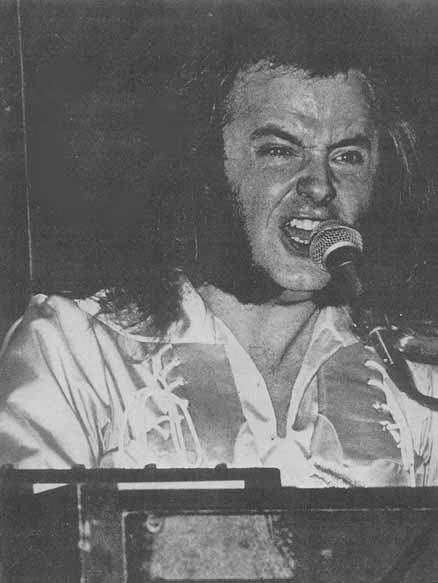 Twelve million Dutchmen considered
them stars. In England they were
nothing. When the Dutch Masters of
progressive rock first landed on the
shores of Great Britain, them were relegated to the bottom third of a three act
show. "The record companies didn't think
we were important enough," Thijs Van
Leer said ironically. "After all, we were
a Dutch group, and nobody ever paid any
attention to the Dutch."
Twelve million Dutchmen considered
them stars. In England they were
nothing. When the Dutch Masters of
progressive rock first landed on the
shores of Great Britain, them were relegated to the bottom third of a three act
show. "The record companies didn't think
we were important enough," Thijs Van
Leer said ironically. "After all, we were
a Dutch group, and nobody ever paid any
attention to the Dutch."
A year and a half later a very, different
scene was taking place in London. It was
early May and a mood of romanticism
had blown in with the British springtime.
At the old and revered Rainbow Theatre
on the outskirts of London, that mood
couldn't have been clearer. As the four
shadows of Flemish musicians took their
places on the darkened stage, a hush
swept across the ancient tiers; it was as
if he theatre itself was holding its breath.
Organist extraordinaire Thijs Van Leer
threw back his head, entranced, and gently coaxed the opening noses of "Focus
III" from his Hammond L-100. Bert
Ruiter's bass purred softly behind the
eerie weeping of Jan Akkerman's custom
Les Paul, finally joined by drummer
Pierre Van Der Linden for a dramatic
ingress into the heart of the song.
Focus had returned to England, and
the Rainbow gig was a Dutch treat that
had marked the climax of their fourth
tour of England, As their dedicated cult
of fans sat spellbound before them, each
member swelled with pride in remembering how far they had come from the time
they were "just a Dutch group." Their
night at the Rainbow was their chance
to click their wooden heels in triumph,
and their new album, 'Focus Live At The
Rainbow' (on Sire Records and tapes),
is a chronicle of that historic event.
Rags and riches: Focus first sprouted
rock & roll roots in obscure Amsterdam
club bands like Johnny & the Cellar
Rockers and The Hunters, and later in the
Netherlands' chart-topping Brainbox. But
the dominant seed in their bold rock-classical mixture was firmly implanted in
the Baroque and Renaissance music of
the 15th and 16th centuries - major influences in both Jan Akkerman's and Thijs
Van Leer's backgrounds.
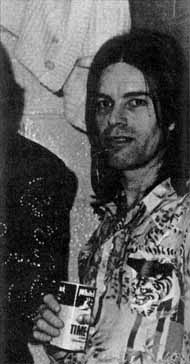 Thijs (pronounced Tice) was born to
musical parents who were part of Amsterdam's wealthy elite. His musical training on piano and flute began when he
was a wee tyke and he spent hours practicing every day in his family's mansion,
At eighteen, while listening to Europe's
acclaimed Radio Luxembourg, he heard
a rock tune for the first time. The song
was by Traffic, and it was then, he said,
that he realized that, "Pop music also
can produce things of beauty." He deserted his classical studies to join a jazz-rock cabaret.
Thijs (pronounced Tice) was born to
musical parents who were part of Amsterdam's wealthy elite. His musical training on piano and flute began when he
was a wee tyke and he spent hours practicing every day in his family's mansion,
At eighteen, while listening to Europe's
acclaimed Radio Luxembourg, he heard
a rock tune for the first time. The song
was by Traffic, and it was then, he said,
that he realized that, "Pop music also
can produce things of beauty." He deserted his classical studies to join a jazz-rock cabaret.
Jan, very much Thijs's alter ego, was
a child of Amsterdam's colourful street scene.
His guitar prowess was self-taught and
evolved through experience in a halfdozen rock bands. By his late teens, Jan
was one of the Netherlands' most eminent rock stars, yet he chucked it all to
accept a scholarship to the Amsterdam
Music Lyceum. He had become fascinated by the lute and classical guitar.
The two rock/classical music buffs
eventually met when Jan learned of Thijs,
who was then trying to earn his own living in the orchestra pit of the Flemish
production of Hair. A friend finally introduced them. After a long afternoon
spent playing for each other - taking
every opportunity to show off their own
technical proficiency and finesse - a
strange friendship was formed as well as
the concept for a serious rock band called
Focus.
Changes in store: "Focus is a Latin
word that is the same in many languages,"
says a craggily striking Jan Akkerman.
"It means, concentration, which is the
meaning of what Focus does."
Thijs Van Leer agrees, pegging the
further sophistication of rock as Focus's
thrust. "In rock music," says Thijs, "the
emphasis is always on the singers. But
instrumentally it is still very immature.
We want to change that."
The British audience has been particularly susceptible to such a change. Focus
soared onto the British charts like invincible Flying Dutchmen with four hit records at once - the albums Moving Waves
and Focus III and two singles, "Hocus
Pocus" and "Sylvia." A Focus concert
there has become as much an event as an
appearance by the lofty Led Zep or Focus's classical-rock co-disciples, Emerson,
Lake & Palmer.
 But across the Atlantic, the highbrowed
hype that preceded Focus Stateside
'fugued' and 'rondoed' right over the Americans' boogie-loving heads. Only the folly
of the Hocus Pocus" yodel and the simplicity of "Sylvia," have had mass appeal in the States,
and although American gold LP's keep
stacking up, their following in the U.S. is
not as great as they deserve.
But across the Atlantic, the highbrowed
hype that preceded Focus Stateside
'fugued' and 'rondoed' right over the Americans' boogie-loving heads. Only the folly
of the Hocus Pocus" yodel and the simplicity of "Sylvia," have had mass appeal in the States,
and although American gold LP's keep
stacking up, their following in the U.S. is
not as great as they deserve.
Just before a concert at the Orpheum
Theatre in Boston, Thijs ran his hand
through his thin, frizzled hair and explained, "It's difficult to describe an audience's reaction to Focus because the
kind of people we attract are not what
you'd call demonstrative people. They're
more into listening, especially in England."
As for American audiences, he con-
tinued, "The hard core fans are very similar to the European audiences in that
they listen and applaud, and get into what
the band is trying to do. The balance of
the audience are people who've come to
find out what it's all about."
Funky violins: A rare occurrence took
place at a Focus concert last August in
Houston, Texas, when they compelled
an entire theatre to rise to their feet in
rock & roll ecstacy. Focus were halfway
through their second encore when the
opening group, a rock act, bolted onstage
for a jam that blended Focus's instrumental expertise with a hefty rocking
beat. Jan later claimed that the idea of
such a seemingly unlikely cross was not
all that far-fetched. "After all," he insists,
"Focus is nothing more than a rock
band. If we were classical musicians we'd
go on stage with violins!"
 To recapture the funky sound they
achieved in Houston, Focus began work
on a new album at Kasteel Groenguerd,
a sumptuous palace hidden away in the
Netherlandish countryside. They had just
returned from their most successful tour
of the U.S., and were about to experiment with a new sound that would make
America theirs at last. Only one thing
stood in their way: a hardheaded drummer named Pierre Van Der Linden.
To recapture the funky sound they
achieved in Houston, Focus began work
on a new album at Kasteel Groenguerd,
a sumptuous palace hidden away in the
Netherlandish countryside. They had just
returned from their most successful tour
of the U.S., and were about to experiment with a new sound that would make
America theirs at last. Only one thing
stood in their way: a hardheaded drummer named Pierre Van Der Linden.
Thijs tries to be objective in relating
the events that led to Pierre's eventual
departure. "Pierre was a purist in many
ways," he explains. "He is very into jazz,
and he felt that rock music would not be
a step forward."
One day, Thijs, Jan, and Bert met at
their usual early hour in the huge, drafty
castle cellar that they had converted into
a rehearsal studio. When Pierre didn't
show up, they assumed that he had overslept and began to jam without him. Several hours later Pierre still hadn't arrived,
nor would he ever play with Focus again.
How could he do such a thing at the
high point in their career? The remaining
members of Focus panicked.
They called Mike Vernon, their producer (and formerly Bowie's and Savoy
Brown's) for advice. Vernon suggested
getting in touch with three drummers he
thought might be available: Mitch Mitchell of the original Jimi Hendrix Experience; Aynsley Dunbar, ex- of the Mothers
of Invention and John Mayall; and Colin
Allen, formerly with John Mayall and
Stone the Crows.
Focus scuffled to the nearest phone and
rang up Colin Allen, whose rock and
R&B experience, they felt, would propel
them into their new direction. By the
next morning, Colin was on the plane
to Holland. Eight days later, he was touring with Focus in America.
Focus Live At The Rainbow was
Pierre's last recorded appearance with
Focus. Their stay at the Rainbow lasted
two glorious, sold-out nights, which were
videotaped and shown on BBC-TV's Old
Grey Whistle Test program.
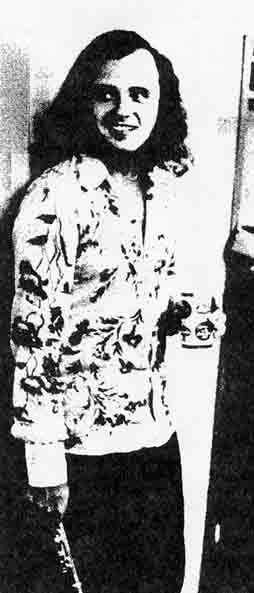 "We didn't do anything special those
nights, only we tried to play very good,"
says Thijs in the simple English he has
perfected. A more appropriate description would be that they tried to play
'better' - better than ever before, and better
than each other!
"We didn't do anything special those
nights, only we tried to play very good,"
says Thijs in the simple English he has
perfected. A more appropriate description would be that they tried to play
'better' - better than ever before, and better
than each other!
Before bursting into "Answers? Questions' Questions" Answers!", Jan first
looked hesitantly at Thijs, self-consciously
hunched his shoulders, then set off on a
rock & roll race up and down his guitar's
neck, paying careful attention to the details of classical fingering. In response,
Thijs unleashed a booming series of organ
chords, beneath which Bert on bass and
Pierre on drums fought not to be outdone. The sound was incredible!
Several months later, listening to Mike
Vernon's sound remix for the BBC broadcast, Thijs couldn't believe his ears. "Is
that us?" he cried. "Is that how we sounded?" He was amazed at the energy of
"Answers? Questions!" and at the tenderness of "Focus II." He and the rest
of Focus decided right at that moment
to select from the twin performances
material for a live album. They included
the highly complex "Eruption" in its
seven-part entirety, as well as "Focus II."
"Focus III," "Answers? Questions!" and
their top hits, "Hocus Pocus" and "Sylvia."
After the show, much of the British
press, who have reassured Focus and
cheered them on since their first, blackoutplagued tour. showed up in force to congratulate their proteges. Also joining the
impromptu backstage bash were Pete
Banks of Flash, and other top rockers
from Deep Purple, the Moody Blues,
and Yes.
Eric Clapton staged his own reunion
at the Rainbow several weeks later. But
by then, Jan Akkerman had already captured the former guitar-king's throne in
the minds of the participants in the Melody Maker poll awarding him the world's
best guitar position. Receiving the news in
his North Holland home, Jan just sank
into his plush easy chair and sighed. Jan
never expected any less for himself yet
all he had originally planned was to make
"beautiful music" in a band called Focus.
Text and pictures kindly sent by
Chuck Cobb
| Previous | | Next | | Section index |